Paste your decklist below to get a full price breakdown with per-card costs from Scryfall.
Fetching prices...
Total Deck Price
$0.00
Average Card Price
$0.00
per unique card
Card Count
0
0 unique
Top 5 Most Expensive
Cost by Card Type
Full Card Breakdown
Qty
Card Name
Type
Price Each
Total Price
Save Money
Find cheaper printings of your most expensive cards.
How Card Pricing Works
This tool retrieves card pricing data from Scryfall, the most complete Magic: The Gathering card database available. Scryfall does not set prices independently. Instead, it aggregates market data from two major secondary-market platforms: TCGPlayer for United States Dollar (USD) pricing and Cardmarket for Euro (EUR) pricing. This aggregation model provides a reliable, vendor-neutral snapshot of what cards are actually trading for across the global marketplace.
When a decklist is submitted to this tool, each card name is resolved against Scryfall's database. The price returned corresponds to the cheapest available regular printing of that card — not a specific set or edition. This approach ensures that the total deck cost reflects the minimum realistic investment required, rather than inflating the figure with premium or out-of-print editions. Foil printings, extended-art variants, showcase frames, and other special editions carry separate pricing and are not included in the default calculation.
Three distinct price metrics are commonly referenced in Magic: The Gathering secondary-market analysis. Understanding the differences between them is essential for making informed purchasing decisions.
Market Price
TCGPlayer Market Price represents the median of recently completed sales over approximately the last 30 days. It is a transaction-based metric, meaning it reflects what buyers have actually paid — not what sellers are asking. This makes Market Price the most reliable indicator of a card's real-world cost. When this tool displays a card's price, it uses Market Price as the default. Market Price smooths out outlier transactions (such as a single copy selling well above or below the norm) by anchoring to the median, providing a stable reference point even in volatile markets.
Mid Price
Mid Price is calculated as the midpoint between the highest buylist offer and the lowest available sell listing. It represents a theoretical equilibrium between what dealers are willing to pay and what sellers are willing to accept. Mid Price tends to run slightly higher than Market Price because it factors in unsold inventory — listings that exist but have not yet attracted a buyer. For frequently traded cards, Mid Price and Market Price often converge closely. For less liquid cards with fewer transactions, the spread between the two can widen considerably.
Low Price
Low Price reflects the cheapest currently available listing on TCGPlayer at the time of the data snapshot. While tempting to use as a cost basis, Low Price can be misleading. A single listing for a damaged or heavily played copy can pull the Low Price well below what most buyers would consider acceptable. Additionally, Low Price is inherently ephemeral: the moment that cheapest copy sells, the Low Price resets to the next available listing. It is best understood as a floor indicator rather than an expected purchase price.
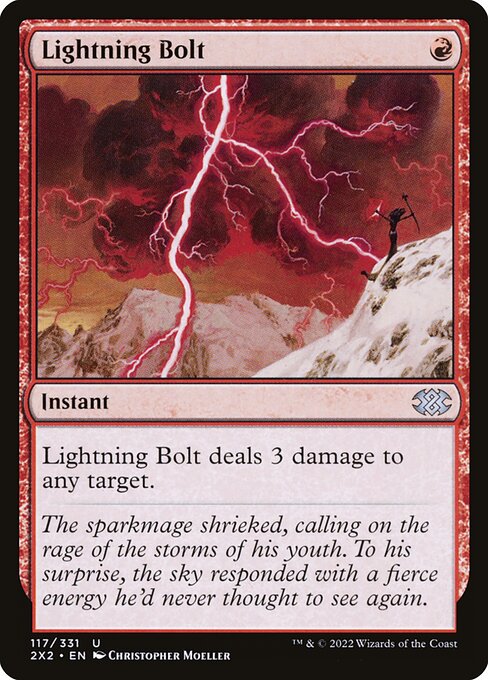
Force of Will — a perennial staple whose price reflects decades of sustained demand and limited reprints.Lightning Bolt — one of the most efficient cards ever printed, widely available at budget-friendly prices due to numerous reprints.
Understanding Price Volatility
Magic: The Gathering card prices are not static. The secondary market operates on the same supply-and-demand dynamics that govern any collectible commodity. A card's value on Monday can differ meaningfully from its value on Friday, and understanding the forces that drive these fluctuations is critical for anyone managing a collection or planning deck purchases. Several recurring factors account for the vast majority of price movement in the Magic secondary market.
Tournament Results
Competitive tournament performance is one of the most immediate and dramatic drivers of card price spikes. When a deck archetype places in the Top 8 of a major event — such as a Pro Tour, Regional Championship, or large-scale open tournament — demand for its key components surges almost overnight. Players who want to replicate or counter the winning strategy rush to acquire the relevant cards, and sellers who recognize the incoming demand adjust their prices upward accordingly.
The magnitude of the spike depends on several factors: the card's existing supply, whether it was already widely played, and how many copies the winning list ran. A four-of that appears in multiple Top 8 lists will see far more aggressive price movement than a one-of sideboard card. Spikes driven purely by tournament results often partially correct within two to four weeks as initial demand subsides and additional supply enters the market from players selling into the hype.
Reprints and New Printings
Reprints are the primary mechanism by which Wizards of the Coast increases the supply of existing cards. When a card is reprinted in a new set — whether a Standard-legal expansion, a Masters set, a Commander precon, or a supplemental product like Secret Lair — the additional supply typically causes the price of that card to decline. The extent of the decline depends on the reprint's print run and distribution. A reprint in a widely opened Standard set will depress prices more aggressively than a limited-run premium product.
The concept of reprint equity is central to understanding this dynamic. Cards that have never been reprinted accumulate price pressure over time as demand remains constant or grows while supply remains fixed. When a reprint is finally announced, the price correction can be substantial — drops of 30% to 60% are common for cards receiving their first reprint in a mass-market product. Conversely, cards on the Reserved List (a commitment by Wizards of the Coast not to reprint certain early cards) are immune to this pressure, which is why many Reserved List cards maintain high and steadily appreciating prices.
Rotation and Format Changes
Standard rotation — the annual process by which the oldest sets leave Standard legality — has a pronounced effect on card prices. Cards that were Standard staples but see limited play in older formats often experience significant price declines as rotation approaches. The market begins pricing in the reduced demand months before the actual rotation date, creating a gradual downward trend that accelerates in the final weeks of legality.
Format-specific supplemental sets also reshape pricing landscapes. Products like Modern Horizons introduce cards directly into Modern (bypassing Standard), creating new demand patterns and sometimes obsoleting existing staples. When a new card functionally replaces an older one, the older card's price typically falls while the new card's price establishes itself based on adoption rate. Commander-focused releases similarly introduce new staples that can shift demand away from existing options.
Ban and Restriction Announcements
Banned and restricted announcements represent the most sudden and severe form of price volatility in the Magic secondary market. When a card is banned in a format, its price in that format context collapses — often losing 50% or more of its value within hours of the announcement. The speed of the decline reflects the market's recognition that demand for the card has been eliminated in that competitive context. Cards that are played exclusively in one format suffer the most; cards with cross-format appeal retain value in their remaining legal formats.
Equally important is the inverse effect: when a powerful card is banned, the cards it was suppressing often spike in price. Banning a dominant strategy makes previously unviable decks competitive again, and the staples of those newly viable archetypes see immediate demand increases. Unban announcements produce the mirror image of this effect — a previously banned card's price surges as players race to acquire copies, while cards that thrived in the banned card's absence may decline.
Speculation also plays a role in ban-related price movements. In the days leading up to a scheduled announcement, cards rumored to be ban candidates often see increased selling pressure, while potential beneficiaries of a ban see speculative buying. This pre-announcement volatility can be significant, though speculative positions carry substantial risk if the actual announcement differs from market expectations.
Building Decks on a Budget
Deck cost is a genuine barrier to entry for many players, but a high price tag does not automatically translate to a stronger deck. Strategic purchasing decisions, informed by market awareness and deck-building fundamentals, can dramatically reduce the cost of a competitive or casual deck without meaningfully compromising its performance. The following strategies represent the most effective approaches to budget-conscious deck construction.
Identify Staples vs. Flex Slots
Every constructed deck contains two categories of cards: staples and flex slots. Staples are the cards that define the archetype — they appear consistently across every competitive version of the deck because no adequate substitute exists. Flex slots are positions in the decklist where multiple cards could reasonably fill the role, and the specific choice depends on metagame considerations, personal preference, or budget.
The most cost-effective approach to deck construction is to prioritize staple acquisitions and fill flex slots with affordable alternatives. For example, a Modern Burn deck's Lightning Bolts and Goblin Guides are non-negotiable staples, but the exact configuration of supplemental burn spells and sideboard options offers considerable flexibility. Identifying which cards in a decklist are truly irreplaceable and which can be swapped for budget alternatives is the single most impactful budgeting skill a deck builder can develop.
Budget Dual Land Alternatives
The mana base is consistently the most expensive component of multi-color decks across all formats. Premium land cycles — fetch lands, original dual lands, and shock lands — command high prices due to their efficiency and universal demand. However, numerous budget-friendly dual land cycles exist that provide functional mana fixing at a fraction of the cost.
Pain lands (e.g., Adarkar Wastes, Karplusan Forest) typically cost between $1 and $3 and provide untapped dual-color mana at the cost of 1 life per colored activation. Check lands (e.g., Glacial Fortress, Dragonskull Summit) range from $1 to $5 and enter untapped if the controlling player already has a land of the appropriate basic type. Gain lands (e.g., Tranquil Cove, Scoured Barrens) are among the cheapest dual lands available, often under $0.25, and gain 1 life on entry — though they always enter tapped, making them best suited for slower strategies.
For Commander specifically, the Battlebond lands (e.g., Luxury Suite, Morphic Pool) enter untapped in multiplayer games and represent strong value for the format. The Lands Reference provides a complete catalog of all available dual land cycles with current pricing data, enabling direct comparison across options.
When to Buy Cards
Timing purchases around predictable market cycles can yield meaningful savings. Several recurring patterns offer reliable buying windows:
Post-rotation dips: Cards rotating out of Standard typically hit their price floor two to four weeks after rotation, as the selling pressure from Standard players saturates the market. Cards with eternal-format demand often recover over subsequent months, making the post-rotation window an optimal buying opportunity.
Reprint announcements: When a card is confirmed for reprinting, its price begins declining immediately — often before the reprint product is even available for purchase. Waiting until the reprint set is widely opened (usually two to three weeks after release) captures the maximum price reduction.
Off-season pricing: The Magic competitive calendar creates seasonal demand patterns. Prices tend to soften during the summer months and during the holiday season when fewer major tournaments are scheduled. Conversely, prices often firm up in the weeks leading into a new competitive season or a major tournament series.
Proxy and Playtest First
Before committing significant funds to a new deck, it is strongly advisable to playtest the list using proxies or digital tools. Many local playgroups and casual Commander pods accept proxy cards for testing purposes. Digital platforms such as Cockatrice and Moxfield's playtesting features provide zero-cost environments for evaluating a deck's performance before purchasing the physical cards.
This approach is particularly valuable for expensive staples. Committing $50 or more to a single card only to discover that the deck does not suit one's playstyle or that the card underperforms in the local metagame is an avoidable outcome. Playtesting first converts speculative spending into informed purchasing.
Price Breakdown Features
This tool provides a full cost breakdown of any submitted decklist. The following components are displayed after a price check:
Total Deck Price: The sum of all card prices in the submitted list, accounting for quantities. This figure represents the minimum expected cost to acquire the deck using the cheapest available regular printing of each card.
Average Card Price: The mean price across all unique cards in the list. This metric helps identify whether a deck's cost is driven by a few expensive staples or distributed evenly across the entire list.
Top 5 Most Expensive Cards: A ranked display of the five costliest cards in the deck. This breakdown immediately highlights where the majority of the budget is concentrated and which cards might be candidates for budget substitution.
Cost by Card Type: A visual breakdown showing how deck cost is distributed across card types — creatures, instants, sorceries, lands, enchantments, artifacts, planeswalkers, and others. Land costs frequently dominate multi-color decks, while creature-heavy strategies may show more balanced distribution.
Full Card Breakdown: A sortable table listing every card in the deck with its quantity, card type, individual price, and total cost (quantity multiplied by unit price). The table supports sorting by any column, enabling quick identification of pricing outliers. Cards submitted with a sideboard designation (preceded by // Sideboard in the decklist) are displayed separately from the mainboard.
Frequently Asked Questions
Where do the prices come from?
Prices are sourced from Scryfall, which aggregates market data from TCGPlayer (for USD pricing) and Cardmarket (for EUR pricing). Scryfall updates its price data daily, so the figures reflect recent sales activity rather than real-time quotes. The price displayed for each card corresponds to the cheapest available regular printing — not a specific set or edition.
How accurate are the prices?
The prices shown reflect TCGPlayer Market Price — the median of recently completed sales over approximately the last 30 days. Actual purchase prices may vary based on card condition (Near Mint vs. Lightly Played vs. Moderately Played), seller reputation, shipping costs, and real-time availability. Foil printings, extended-art variants, and other special editions are not included in the default price and carry separate, often higher, pricing.
What is the difference between market, mid, and low price?
Market Price is the median of recent completed sales — it reflects what buyers have actually paid. Mid Price is the midpoint between the highest buylist offer and the lowest available sell listing, representing a theoretical equilibrium that tends to run slightly above Market Price. Low Price is the cheapest currently available listing, which may represent a damaged or heavily played copy and should not be treated as an expected purchase price.
How do I find budget alternatives for expensive cards?
Start by identifying which expensive cards are true staples and which occupy flex slots that can accept substitutes. For mana bases, consult the Lands Reference for a side-by-side comparison of dual land cycles at every price point. For non-land cards, look for functionally similar options that achieve the same strategic goal at a lower cost — budget removal, card draw, and ramp options exist across all colors. The land count guide can also help optimize mana base construction.
What formats are supported?
Any format. The tool prices every card in the submitted list regardless of format legality — Standard, Pioneer, Modern, Legacy, Vintage, Commander, Pauper, or casual. Format legality is not validated; the tool is purely a pricing utility.
Why does my deck price change between checks?
Card prices fluctuate continuously based on supply and demand dynamics, tournament results, reprint announcements, ban list updates, and general market conditions. A single card spiking after a tournament Top 8 appearance can shift the total deck cost by a noticeable margin. Prices are cached locally for 24 hours; a hard refresh (Ctrl+Shift+R) will fetch the latest data from Scryfall.
Does the tool account for foils or special editions?
No. The tool returns the price of the cheapest available regular (non-foil) printing of each card. Foil, extended-art, borderless, showcase, and other premium printings carry separate pricing that is typically higher than the standard version. To check pricing for a specific printing, consult Scryfall directly.
Can I check prices in currencies other than USD?
Yes. The tool supports both USD (sourced from TCGPlayer) and EUR (sourced from Cardmarket). Use the currency toggle above the decklist input to switch between the two. Note that USD and EUR prices are independently determined by their respective marketplaces and do not simply reflect a currency conversion — regional supply and demand differences can cause meaningful price discrepancies between the two.