Monastery Swiftspear Is Back: How Mono-Red Aggro Took Over Standard
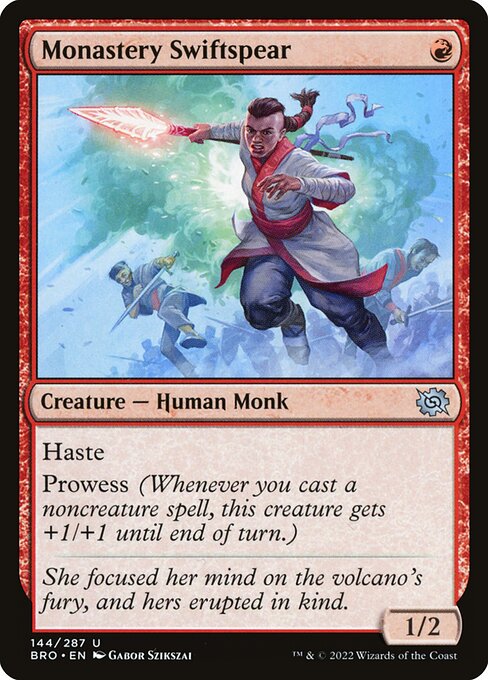
Okay, let's be real for a second. When was the last time you saw a mono-colored aggro deck that didn't make you groan? Maybe it was in a different rotation, or maybe it's been that long. Well, guess what's back? Monastery Swiftspear is back, baby. And she brought friends.
The data doesn't lie—Mono-Red Aggro has surged to Tier 1 status in Standard, and it's not even close. The deck is cheap to build, brutally fast, and punishes anyone who thought they could durdle around with a three-mana value piece. If you're on the play, you're already winning on turn 4. If you're on the draw? Well, you might still win on turn 4. That's how broken this deck is right now.
Before we cover why this deck works, here's the core list I've been running with great success:
That's it. No fancy duals, no convoluted synergies. Just creatures that hit hard and burn spells that get the job done. Some lists play a couple of cheap scavenging effects or a few more creature spells, but this is the stripped-down version that just works. Trust me, I've tested it for like fifty matches, and it's putting up numbers, even against the top dogs. Standard's meta is a wild place right now, with Izzet Lessons leading at 10.8% and Mono-Green Landfall trending up at 8.3%, but Mono-Red Aggro is right there, trending up strong at 3.9%.
Why This Deck Actually Works
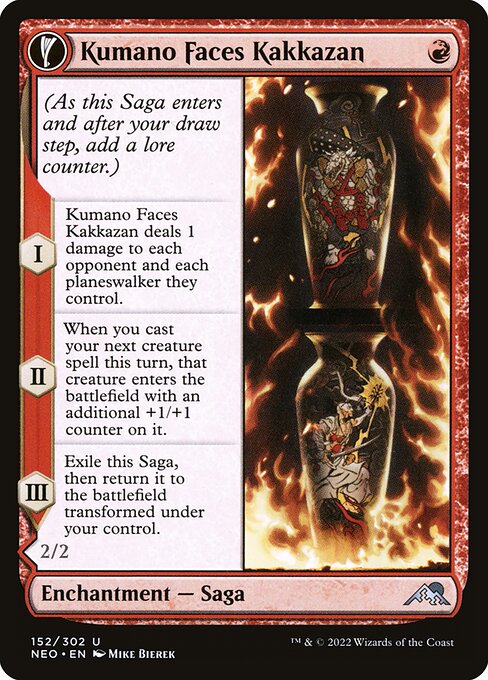
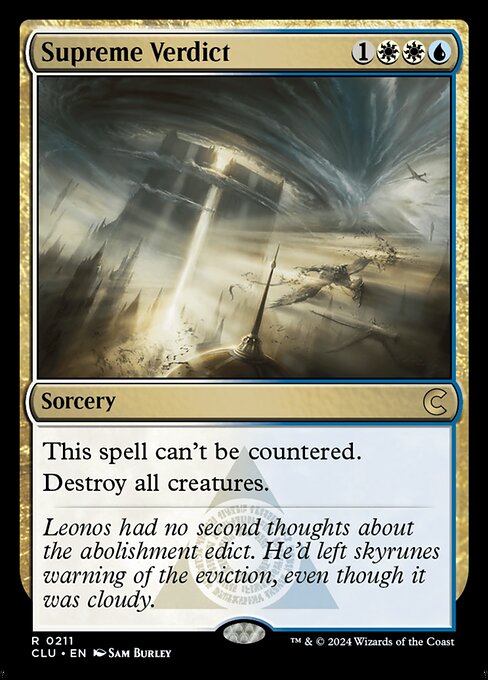
The reason Mono-Red Aggro is dominating right now is simple: threat density. You have twelve creatures that all need to be answered immediately. Turn 1 Monastery Swiftspear into turn 2 Kumano Faces Kakkazan? That's a 5/4 attacking on turn 3. And if they Supreme Verdict it? Cool, you have four more.
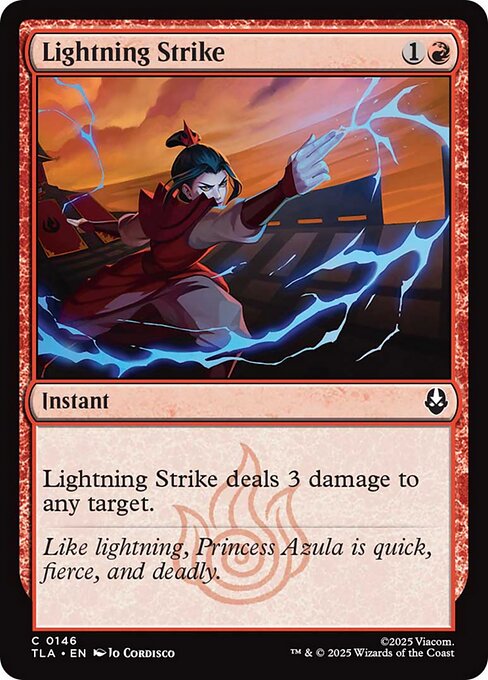
What makes Monastery Swiftspear so good here is that she's not just a 1/2 for one. She's a 1/2 that gets +1/+0 whenever you cast a noncreature spell. And we're casting a lot of those. Lightning Strike at 2 damage might seem low, but when it's turning your Swiftspear into a 2/2 attacker FOR FREE, that's value. Same with Play with Fire—scry 1 and 2 damage, and oh yeah, your Swiftspear is now bigger.
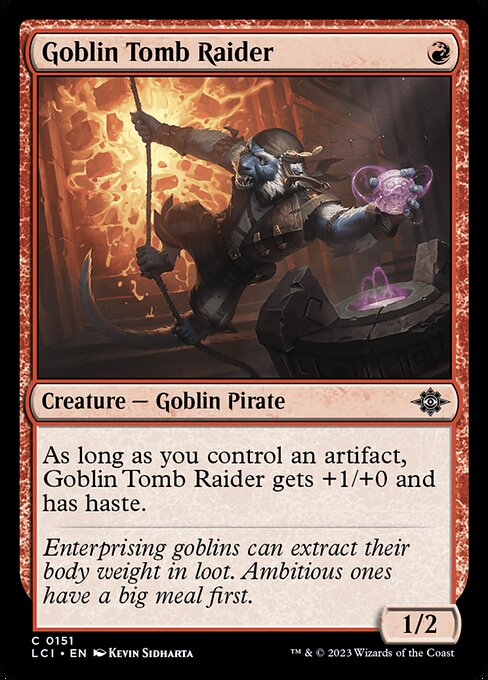
Goblin Tombraider is the unsung hero of this deck. Three mana for a 3/2 Menace creature? That's insane. Menace means it's almost impossible to block with just one creature, so you're almost guaranteed 3 damage. And when they finally have to double-block, you can just burn them out with your remaining spells. It's a fantastic follow-up to a turn 1 or turn 2 play, forcing your opponent into awkward blocks or taking a huge chunk of damage.
Then there's Kumano Faces Kakkazan. This pseudo-creature is an absolute powerhouse. It's a turn-one play that deals damage, buffs your other creatures, and then becomes an attacker itself. The synergy with Monastery Swiftspear is off the charts, letting you swing in for massive early damage. It's truly one of the best red one-drops printed in recent memory, providing both reach and a persistent threat.
The spell suite is equally critical. Lightning Strike and Play with Fire are your bread and butter, efficient removal that can also go directly to the face. They enable your prowess triggers on Monastery Swiftspear and get you closer to that lethal burn. Don't underestimate the scry from Play with Fire; in an aggro deck, every bit of card selection helps ensure you find your next threat or burn spell. These cheap spells are essential for maintaining pressure.
The Turn 4 Kill (And How to Get There)
Let me walk you through the most common kill sequence so you understand the math:
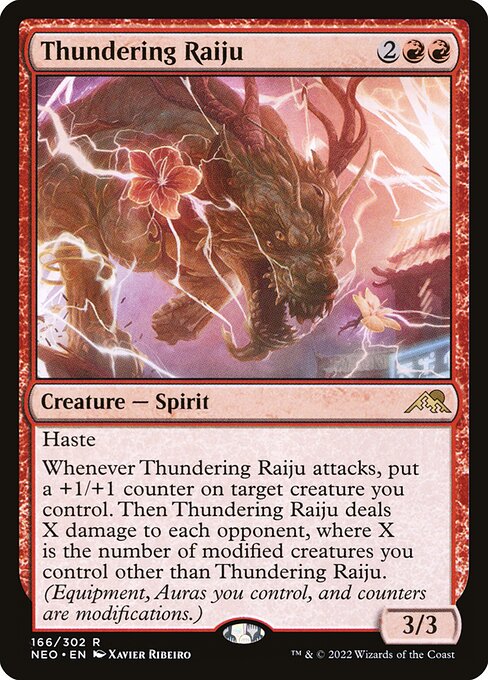
- On the play: Turn 1 Monastery Swiftspear. Turn 2 Kumano Faces Kakkazan (now we have 1+3+1 = 5 power total). Turn 3 Thundering Raiku for 4 damage. Turn 4 Skewer the Critics for 3. That's 12 damage, and they started at 20. They're at 8. One more burn spell and they're dead.
- On the draw: Turn 1 Goblin Tombraider. Turn 2 Monastery Swiftspear. Turn 3 Kumano Faces Kakkazan. Turn 4 Lightning Strike + Play with Fire = 4 damage. Total of 3+1+4+2+2 = 12 damage across four turns. Same math.
Now factor in that every noncreature spell you cast pumps your Swiftspear. You're not just dealing damage with your spells—you're making your creatures bigger too. It's a two factors that most decks just can't handle. The key is knowing when to commit to the board and when to hold back burn for reach. This isn't just a brainless 'slam everything' deck. It requires precise sequencing and a good understanding of your opponent's removal suite. For instance, if you suspect a board wipe like Farewell from an Azorius Control deck, you might hold back a Goblin Tombraider to rebuild after the dust settles.
Against decks like Dimir Excruciator, which is sitting at 8.6% of the meta, you need to be faster than their threats. Their Deceit and Requiting Hex can disrupt your early game, but your sheer speed often outpaces their setup. You want to get under their counterspells and force them to make reactive plays. If you can force them to use a Superior Spider-Man as a blocker, you're already ahead.
Sideboarding: What to Bring In
The maindeck is already tight—you don't want to dilute the plan. But you gotta adapt. Here's what I'll bring in based on what I'm facing:
Against Control (Izzet Lessons, Azorius Control, Dimir Midrange, etc.)
Against these grindy decks, you need to diversify your threats and increase your reach. Bring in your Atarka's Command and maybe a couple more burn spells like Roaring Blaze. These decks like to go long, establish a board, or resolve strong planeswalkers like Gran-Gran from Izzet Lessons. Atarka's Command is great because it's a fight—they cast a planeswalker, you fight it. They go to stabilize with a big blocker, you fight it. It's versatile and crucial. You also want to consider Rekindling Phoenix against heavy removal. It's incredibly resilient and can fly over their ground blockers, forcing them to spend multiple cards to answer it.
For match-ups like Izzet Lessons (10.8% of the meta), you're trying to punish their slower starts. Their Monument to Endurance can be problematic, but your goal is to finish the game before they can get it online. Chandra, Torch of Defiance is also excellent here, providing card advantage and direct damage. Don't forget Fry against blue or white threats that are hard to deal with otherwise, like a problematic Planeswalker or a big flier. The key is to keep the pressure on and deny them the time to set up their engine.
Against Midrange (Selesnya, Jund, Mono-Green Landfall, etc.)
These decks have bigger creatures and often try to out-value you. Bring in Skewer the Critics for efficient damage and card flow, and consider some extra removal like Abrade for their artifacts or creatures. Skewer the Critics is actually a monster because it deals 3 damage and draws a card. Card advantage matters when you're trading creatures. Against something like Mono-Green Landfall (8.3% of the meta) with their Badgermole Cub and Icetill Explorer, you need to be able to clear the path for your attackers or burn them out before they can grow too large. Rampaging Ferocidon is a house against any deck looking to gain life, and its static ability makes it a must-answer threat. It can shut down lifegain strategies cold.
Against Other Aggro (Boros Aggro, Mono-Green Aggro, etc.)
This is a race, and you need to be the one controlling the board. Bring in more Lightning Strike and Play with Fire. If they're playing creatures, you need to kill them. Simple as that. Soul-Scar Mage is also fantastic here, turning your burn spells into permanent power-reduction effects, which is great for winning combat or clearing away larger threats efficiently. You want to be able to trade up or simply go over the top with direct damage. Remember that on the play, you have a significant advantage, so use your removal to keep their board clear and press your early threats.
Common Mistakes New Players Make
I see this all the time at FNM—people playing this deck like it's just spam all your spells. That's wrong. You need to sequence properly:
- Don't overcommit: If you have a hand with two creatures and two burn spells, you might want to lead with the creature that has more immediate impact. Sometimes holding up a Lightning Strike to protect your board is better than playing it on turn 2. Against decks with sweepers, you absolutely need to manage your board state. It's better to have one creature in play and follow up with another than to have three creatures wiped by one spell.
- Know your math: You don't always need to deal exactly 20 damage. If they've gained life (looking at you, Selesnya Company), you need to adjust your game plan. Track their life total and your available damage. Sometimes, a few points of burn can set up a lethal attack next turn, while other times, you need to go all-in on a single turn.
- Play around sweepers: If you suspect they have a sweeper (and in Standard, everyone does), don't overextend. Keep one creature back. It's better to have one creature in play than zero. This might mean holding a Goblin Tombraider in hand even if you have the mana, especially against control decks with cards like Farewell or Sunfall.
- Manage your lands: While Mono-Red is straightforward, knowing when to hold lands (for Landfall triggers if you splash, or just to bluff) or play them out is important. For a mono-color deck, mana screw is rare, but mana flood can happen. Ensure you have enough red sources, which is usually easy with 20 Mountains, but if you're ever brewing
This deck is brutally simple, but that's its strength. You don't need to think too hard about complicated synergies. You just need to curve out, hit them in the face, and burn them out. That's it. That's the whole deck.
Beyond Standard: Red Aggro in Other Formats
It's not just Standard where red aggro is making waves. Take a peek at Pioneer, where Mono-Red Prowess is absolutely crushing it with a staggering 19% meta share, and an average paper price of just $98! That deck runs cards like Screaming Nemesis and Emberheart Challenger alongside our good friend Monastery Swiftspear. The strategy translates well: cheap threats, efficient burn, and turning noncreature spells into for extra damage. It's an aggressive shell that works in pretty much any format that lets it exist.
Even in Modern, while not as dominant, you see elements of this strategy. Boros Energy leads Modern at 16.8%, packing cards like Phlage, Titan of Fire's Fury and Ragavan, Nimble Pilferer. While much more expensive ($840), it shares the core philosophy of getting under opponents and burning them out. There's also a nascent Mono-Red Burn archetype at 0.2% that's trending up, utilizing classics like Goblin Guide and Lava Spike. The fundamental principles of red aggro are timeless.
The beauty of these archetypes is their consistency. They don't rely on complex combos or perfect draws. They just need a decent curve and a willingness to turn creatures sideways. If you love that play style, these decks offer a similar, satisfying experience across formats.